

Singapore and New Zealand researchers partner in groundbreaking child obesity study
A study has shown that the nutrients mums receive before and during pregnancy can make a real difference to how much weight their children put on in the first years of life.
In 1981, as a final year medical student, Professor Wayne Cutfield chose an elective at a hospital in Papua New Guinea. It was an experience he would never forget and that would shape his career.
“It was a hospital in a very poor area. I saw so many sick children. I thought, I really want to specialise in paediatrics. That period of my life set me on the path I am on now.”
Today, Wayne is participating in a groundbreaking longitudinal study led by New Zealand, Singapore and United Kingdom researchers that could help reduce rates of childhood obesity in New Zealand and elsewhere. Alongside Wayne, the leadership team includes Singapore’s Associate Professor Shiao Yng Chan and the United Kingdom’s Professor Keith Godfrey.
“One in three children in New Zealand is overweight or obese by the time that child starts school,” Wayne says.
“The UK has similar issues, and Singapore is seeing a rising trend in obesity too.”
“The team includes Singapore’s Associate Professor Shiao Yng Chan and the United Kingdom’s Professor Keith Godfrey.”
Half the mothers in the study received an enriched supplement including vitamins B2, B6, B12, D, probiotics and myo-inositol — a naturally occurring sugar found in food like beans and fruit — together with standard pregnancy supplements like folic acid, beta carotene, iron, calcium and iodine.
The other half were in a control group and received standard pregnancy supplements alone. Neither the mums nor their medical teams knew which group they were in.
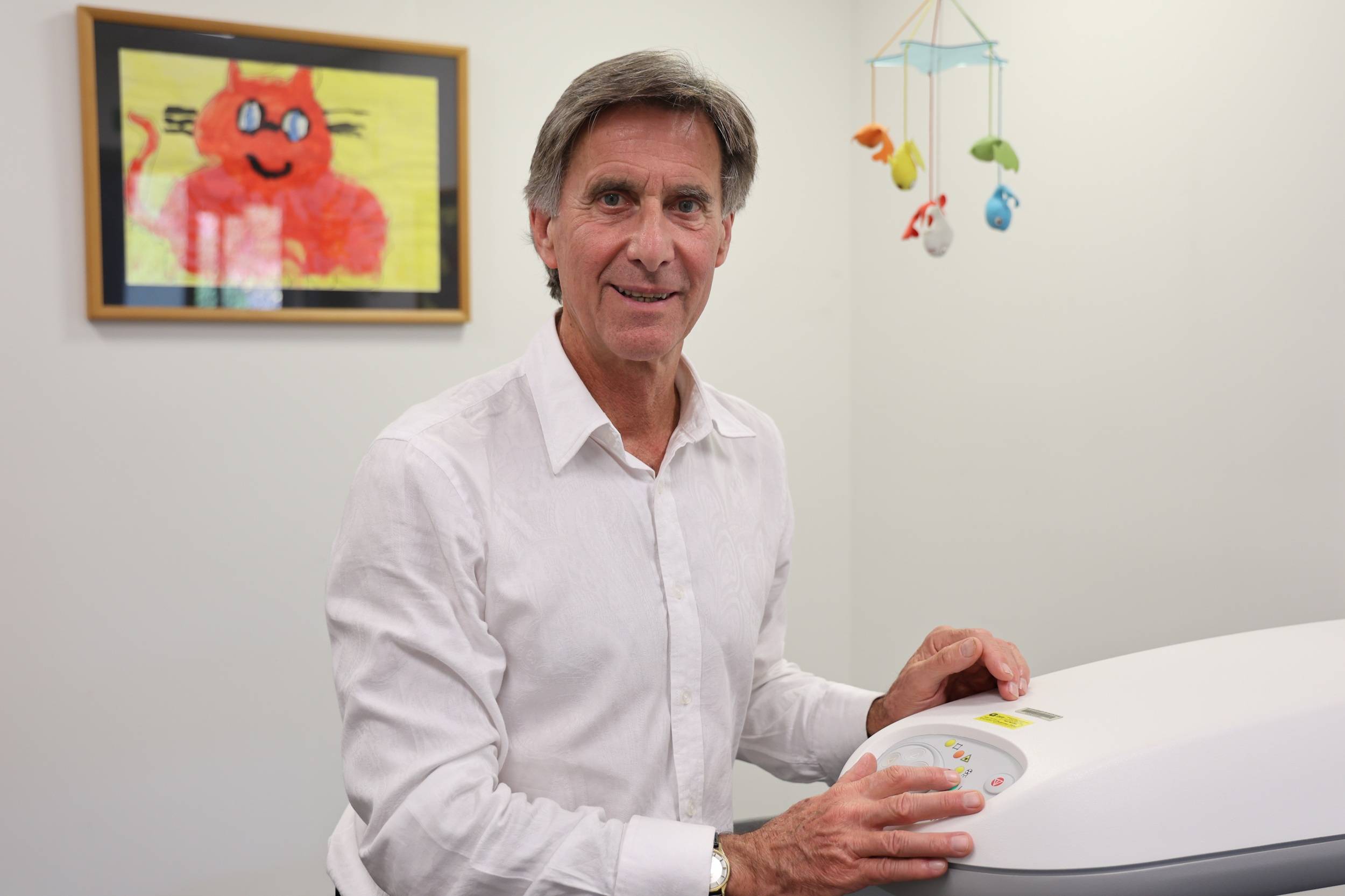

“One in three children in New Zealand is overweight or obese by the time that child starts school.”


“While the study did not show a difference in blood glucose levels during pregnancy, we found that it could reduce the preterm births and impact the babies into childhood and potentially beyond,” Wayne says.
The team assessed the infants several times throughout their first year. When researchers checked in on the children at age two, they found half as many obese children in the cohort whose mothers were in the enriched supplement group compared to the control group.
“Our findings suggest that introducing enriched supplements before and during pregnancy can have benefits way beyond the pregnancy.”
The study has yielded more than expected. To date, the study team have published 26 high impact scientific articles with many more to come.
“More than 10 years after we commenced this study, we continue to learn from it.”
“Each of the centres — Singapore, New Zealand and Southampton in the UK — has a unique skill set. It makes for a rich combination and successful collaboration.”
Wayne cites New Zealand's expertise in paediatric growth and metabolism, and Singapore's track record in obstetrics and maternal health as areas of growth.
The Southampton team contributed considerable expertise in micronutrients and in performing large scale intervention trials during pregnancy.
The children are now coming up to 10 years of age. Wayne hopes the leadership team will be able to keep the project going.
“We're looking at wider treatment impacts on mothers and their offspring. There is a lot more to uncover in terms of aspects of health and wellbeing.”
The NiPPeR study is a collaboration between the Liggins Institute at the University of Auckland, the University of Southampton, the NIHR Southampton Biomedical Research Centre, the National University of Singapore, National University Hospital, and A*STAR, Singapore's Agency for Science, Technology and Research.