

New Zealand-Singapore business uses mushrooms to replace polystyrene
Entrepreneurial flair, a Singapore connection and a mushroom root – these are the ingredients that drive New Zealand entrepreneur Shaun Seaman’s international success.
Mushroom Material takes agricultural waste, like leftover straw, stalks, leaves and pulp, and mixes it with mycelium, the vegetative root-like structure of fungi. The mycelium grows around the agricultural waste, consuming it and binding it together as a natural adhesive. The resulting material is then turned into small pellets, which can be moulded.
“The largest living organism in the world is an underground mycelium network in Oregon’s Blue Mountains. Mycelium-based materials have been around for many years, but no one has figured out how to produce it to scale,” Shaun says.
“By turning the material into pellets, we have unlocked global scale at a competitive cost.”
Born in South Africa, Shaun Seaman grew up in Dubai and moved to New Zealand for university. He currently lives in Auckland. Mushroom Material is headquartered in Singapore.
For Shaun, having a business with a foot in Singapore and another in New Zealand means having the best of both worlds.
“Singapore is a major world hub and unbeatable for distribution and production.”
“Singapore is a major world hub and unbeatable for distribution and production. It’s also closer to our customers as most international brands have a regional HQ in Singapore.”
“New Zealand is exceptional in terms of broad start-up experience. The eco-system here is very good,” he says.
Shaun studied mechanical engineering in Auckland with a focus on composite materials. He came from a family of self-starters, he says, which made him want to set up his own business.
After university, he went to work for Fisher & Paykel, where he designed plastic injection moulding equipment into the company’s appliances. Later, he worked at StretchSense Limited, a supplier of smart silicone stretch sensors for use in wearable technology in areas such as AR/VR gaming.

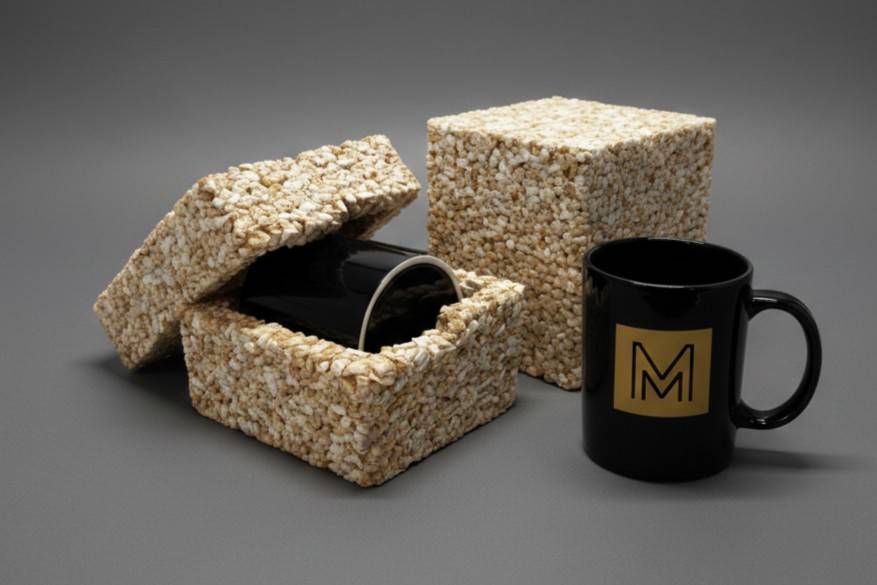
“I wanted to find a sustainable, biodegradable product that could replace polystyrene. That was my starting point.”
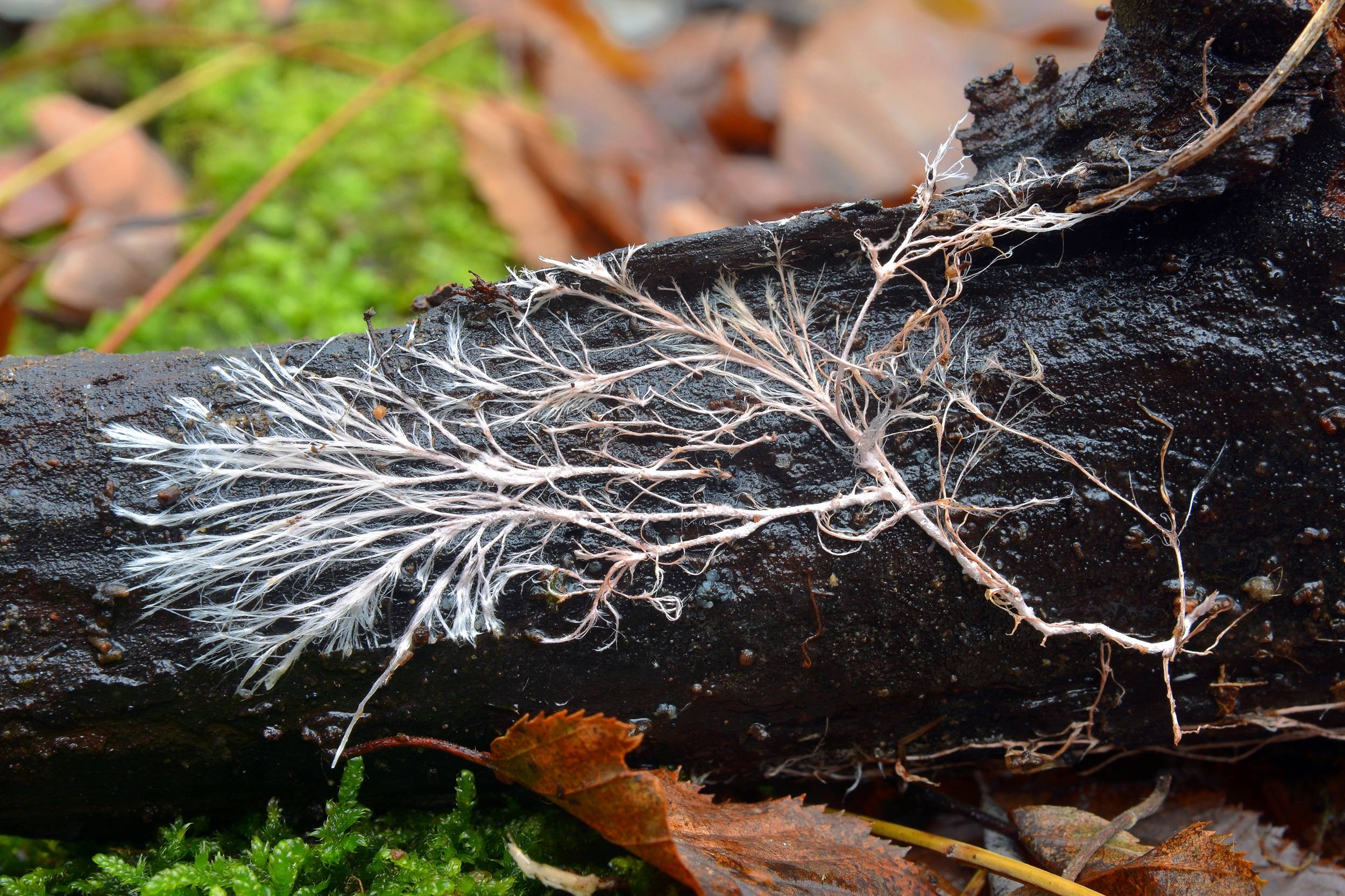
It was a surfing trip in 2018 after he had worked at StretchSense that set Shaun on the path he is on now.
“I went surfing in the Indian Ocean, expecting beautiful, pristine waters. I ended up with plastic bags wrapped around my legs. The beaches were covered in expanded polystyrene.”
“It made me realise that if I took on a project it needed to be sustainable, not just for fun.”
“The beaches were covered in expanded polystyrene.”
The Singapore connection was made in 2019, when Shaun joined a start-up accelerator there. After an intense selection process, he spent three months in Singapore taking part in what was essentially a matchmaking exercise.
“You’re basically speed dating with people from around the world. The idea is to hopefully find your match, then present a concept to an investment committee that decides whether it wants to fund you or not.”
He didn’t find the right partner, but he built connections that would prove useful as he set up his own business.
It was then he finalised his proposal and secured funding from IceHouse Ventures, a NZ venture capital company, and TechStars, a US company that invests in startups.
Since its inception, Mushroom Material has built an impressive international client list, from household consumer electronics to home grown New Zealand wineries.
“We have a core product that we can use in many different ways, ranging from protective packaging to thermal and acoustic insulation,” Shaun says.
“We’ve found that New Zealand is home to many exceptional entrepreneurs.”
Mushroom Material’s main Singapore-based investor is venture capital firm Wavemaker Partners. Paul Santos is the firm’s co-founder and managing director.
“We’ve found that New Zealand is home to many exceptional entrepreneurs,” Paul says.
“What stood out about Mushroom Material is its proprietary technology that enables the scalable production of mycelium-based biomaterials, addressing one of the industry’s biggest barriers to adoption.”
Other businesses like Ecovative, Magical Mushroom Company and Grown.bio operate in the same sector but Mushroom Material uses a fundamentally different manufacturing process focused on improving scalability and reducing cost, Shaun says.
“We don't compete for the same customers. In most cases, our closest competitor is cardboard rather than other mycelium companies.”