

From the Keukenhof to Canterbury
How the Dutch flower bulb trade made a home on the other side of the world
The Free Trade Agreement between the EU and New Zealand entered into force on 1 May 2024. For the bulb sector, the trade agreement did not seed the relationship from scratch. Trade was already well established. What it does offer is greater certainty around the conditions that allow this kind of long-term cooperation to grow.
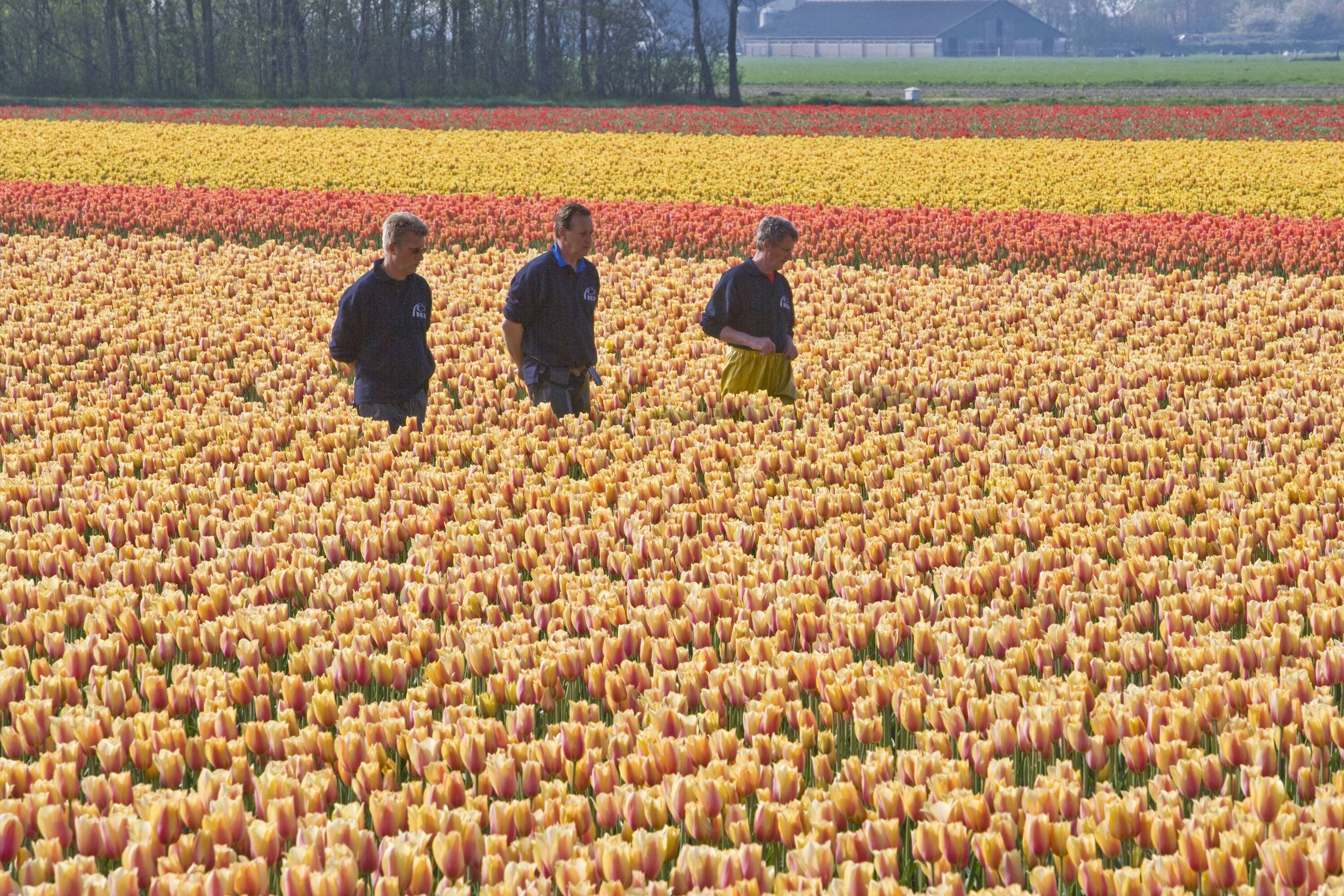
Every autumn, when the bulb fields of the Bollenstreek lie empty and the harvest sits in cold storage waiting for the new season, farmers on the other side of the world are getting back to work. In New Zealand's South Island, on the flat plains of Canterbury and Southland, local contract growers are planting bulbs in soil that in texture and climate bears a striking resemblance to the fields in the Netherlands. Except that in New Zealand, it is early spring.
That seasonal contrast has become the basis of a long-standing commercial partnership between the Netherlands and New Zealand. For Dutch flower bulb and seed companies, New Zealand is not simply a distant export market. It is part of the production calendar itself. Today, with the EU–New Zealand Free Trade Agreement in force, that relationship is blossoming.
A difference of seasons
The logic is straightforward. The Netherlands is the world’s leading exporter of flower bulbs. Tulips, lilies, daffodils and hyacinths are grown, certified, packed and shipped from the Netherlands to flower producers around the world. But the businesses supplying florists, wholesalers and supermarkets need reliability throughout the year, not only during the northern hemisphere season.
A tulip bulb harvested in May in the Noordoostpolder cannot simply be grown again before December. New Zealand offers the missing half of the year. When autumn arrives in the Netherlands, spring is beginning in New Zealand. Bulbs harvested in the Dutch summer can be followed by fresh, certified bulbs from towns such as Rakaia, Edendale and Temuka only a few months later.
This simple difference in seasons has created a highly specialised supply chain. Dutch and New Zealand producers now work together to keep flowers available throughout the year, serving customers in markets from Europe and North America to Asia.
Royal Anthos: the collective that makes trade possible
Royal Anthos, the Royal Trade Association for Nursery Stock and Flower Bulbs, plays a central role in keeping that system moving. Founded in 1996, Anthos represents Dutch companies trading in flower bulbs and hardy nursery stock.
Much of its work revolves around making life easier for its members. Phytosanitary rules, customs procedures, quality certification and plant breeders’ rights all determine whether bulbs can move smoothly across borders. Anthos works with governments and authorities to make that trade possible in practice.
The scale is considerable. Every year, Anthos members ship more than 3,500 sea containers of bulbs and perennials to the United States and Canada alone under a pre-clearance programme that removes the need for inspections on arrival. New Zealand is another important partner in this international system, both as a place of production and as a country with which Dutch companies have built long-term trust.
“We do anything that our members cannot do individually. One of them, of course, is talking to governments since that's always a government to trade organisation discussion rather than a company discussion.”
“It makes business more predictable. And that’s, of course, also very positive in trade negotiation or in trade flows. The more predictable and the clearer the advantage of having an agreement, the more it helps in developing the business. It’s like water on a plant — it will grow once you have it in place.”
Mark-Jan Terwindt, CEO of Royal Anthos

Twenty-five years of roots in New Zealand
The first major Dutch flower bulb companies established operations on New Zealand’s South Island in the second half of the 1990s. They were not looking only for new customers. They were looking for a second growing season.
They leased land, worked with local farms, built sorting and cold storage facilities, and brought in Dutch agronomic expertise to support cultivation. Over time, what began as a practical response to seasonality became a permanent part of their business model.
The relationship is still visible today. In towns such as Rakaia and Edendale, Dutch companies have been part of local working life for more than two decades. Knowledge moves in both directions, through people, farming practices, technical expertise and long-standing personal relationships. The connection is no longer just about moving bulbs from one country to another. It is about shared production.
For Erik van Dam, CEO of Triflor, that relationship has become personal as well as commercial. “When I’m there, it feels like coming home,” he says. “I put on my work clothes and head out to the fields. Edendale is the most beautiful place on earth to grow our bulbs.”
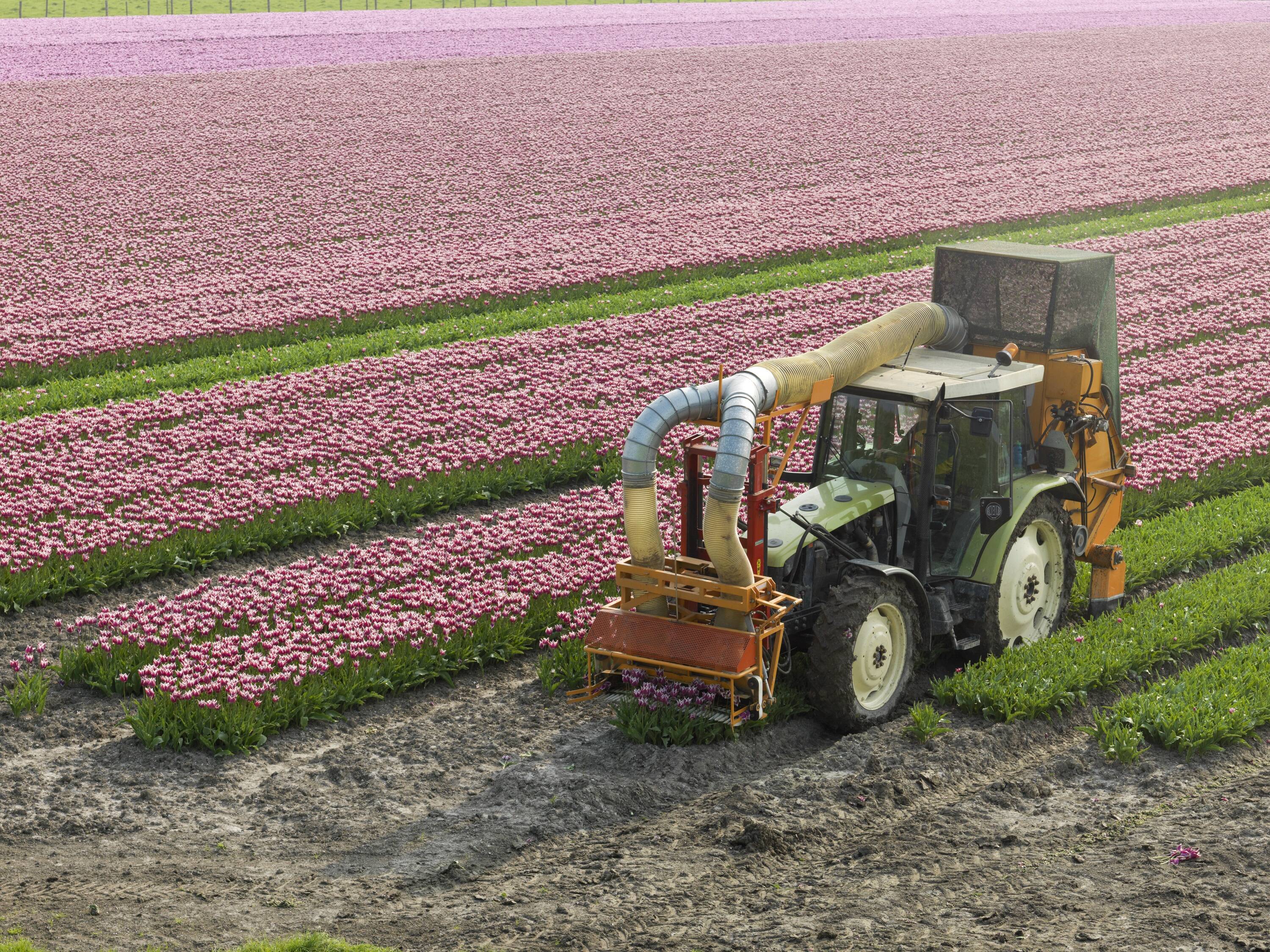
New Zealand’s role in the sector continues to grow. Tulips and lilies now cover around 800 hectares on the South Island, and that figure is expected to rise.
An ecosystem around the fields
The Dutch-New Zealand horticultural relationship is not only built on climate and geography. It also depends on the wider ecosystem around the fields.
Dutch bulb companies often work with neighbouring farms in New Zealand to rotate crops. Bulb production happens only once every seven years on a plot of land, so crops are rotated with other agricultural activity, helping to maintain soil quality and create value for local farms. The bulbs provide nitrogen to the soil, turning what might look like a purely export-driven supply chain into a more integrated local farming model.
Finance is another part of that ecosystem. In both countries, growers can work with Rabobank, a bank with deep roots in agriculture and horticulture. For Dutch companies operating in New Zealand, that continuity matters. It means they can draw on an institution that understands the sector, the seasonal dynamics of agricultural production and the long-term investments involved, while also accessing local knowledge and financial solutions in New Zealand. Given the scale, distance and timing involved in international horticultural supply chains, that kind of sector expertise can support businesses as they plan investments, manage working capital and build long-term partnerships across markets.
The businesses themselves also work together, for example by coordinating logistics, sharing networks and jointly filling containers for export. In a sector where timing is everything, that kind of coordination can make the difference between a smooth season and a missed opportunity.
Beyond bulbs: seeds, breeding and future-proof crops
The flower bulb trade is one of the clearest examples of Dutch-New Zealand cooperation, but it is part of a wider horticultural story. The same logic that makes the bulb sector work also applies to other areas: Dutch expertise, New Zealand growing conditions, local partnerships and long-term investment.
One example is Rijk Zwaan, a leading Dutch family-owned fruit and vegetable breeding and seed company. Through its R&D and investment in industry-leading breeding and production facilities, the company develops new vegetable varieties for professional growers in more than 100 countries. Rijk Zwaan works with various strategic partners in market, including Terranova Seeds, which managed sales, support, and the supply of seeds to shared grower partners in New Zealand.
This cooperation goes beyond supplying seeds. Vegetable varieties such as lettuce, tomatoes, cucumbers and peppers need to perform under local growing conditions. That requires research, adaptation and close contact with growers. Through its partnerships in New Zealand, Rijk Zwaan supports the development and selection of varieties that can offer higher yields, stronger disease resistance and greater resilience in changing growing conditions.
Here too, the relationship is not simply transactional. It is based on technical expertise, local testing, on-the-ground support and shared knowledge. For professional growers, the value lies not only in the seed itself, but in the confidence that a variety has been selected for their climate, their production system and their market.
“When I'm there, it feels like coming home. I put on my work clothes and head out to the fields. Edendale is the most beautiful place on earth to grow our bulbs.
In difficult times, collaboration is multiplication. Our long-standing relationships are what truly got us through the pandemic.”
Erik van Dam, CEO Triflor


The trade agreement: new certainty for an existing foundation
For Anthos and its members, predictability is one of the most valuable outcomes from the NZ-EU FTA. In a sector where companies make decisions years ahead, clear trading rules and reliable channels of communication matter. They give businesses the confidence to invest, expand and plan beyond the next season.
As Mark-Jan Terwindt, Chief Executive of Royal Anthos puts it: “It makes business more predictable. And that’s, of course, also very positive in trade negotiation or in trade flows. The more predictable and the clearer the advantage of having an agreement, the more it helps in developing the business. It’s like water on a plant. It will grow once you have it in place.”
The agreement has already yielded some practical benefits for growers. Specialist knowledge of bulb production takes years to acquire. Under the FTA, growers can take advantage of a streamlined visa pathway for specialist Dutch bulb workers to travel to New Zealand at peak times in the season – making the exchange of knowledge even easier.
The agreement also provides a framework for dialogue when issues arise. For a sector shaped by regulation, logistics and biological timing, that matters. A delay at the border, a change in certification requirements or a local production challenge can have consequences across an entire season. Having the right structures in place makes it easier to solve problems before they become obstacles.
New Zealand as a platform for global trade
New Zealand’s value for Dutch companies is not limited to its climate. It also sits within a wider international trade network. New Zealand has 17 free trade agreements in force, covering more than 70 percent of its global trade. These agreements open up market opportunities, streamline processes, reduce costs and create greater certainty for companies working from New Zealand into global markets.
For Dutch horticultural businesses, that matters. A company investing in New Zealand is not only gaining access to a second growing season. It is also operating from a country with strong trade links across the Asia-Pacific region and beyond. For sectors that depend on reliability, certification and efficient movement across borders, that wider network adds another layer of value.
The future: beyond bulbs
The bulb sector was one of the early examples of Dutch-New Zealand cooperation, but it is not the only one. The two countries share strong traditions in agri-food, horticulture, water management, logistics and life sciences. With the New Zealand Embassy in The Hague acting as a connector and the trade agreement creating a stronger framework, more Dutch companies are finding reasons to look to New Zealand.
The figures point in the same direction. Since the agreement entered into force, two-way trade between New Zealand and the Netherlands has grown by more than 30 percent to NZD$2.81 billion. That growth is not only the result of policy. It reflects businesses that see the value of working across both countries.
The flower bulb trade shows what that can look like in practice: Dutch expertise, New Zealand growing conditions, shared standards, financial infrastructure and trusted relationships built over decades. The seed sector shows how that same partnership can support future-proof horticulture, from resilient vegetable varieties to local grower support.
From Keukenhof to Canterbury, the story is not only about flowers. It is about how two small, outward-looking trading nations can turn distance into opportunity, and how a seasonal partnership can grow into a wider horticultural ecosystem.