

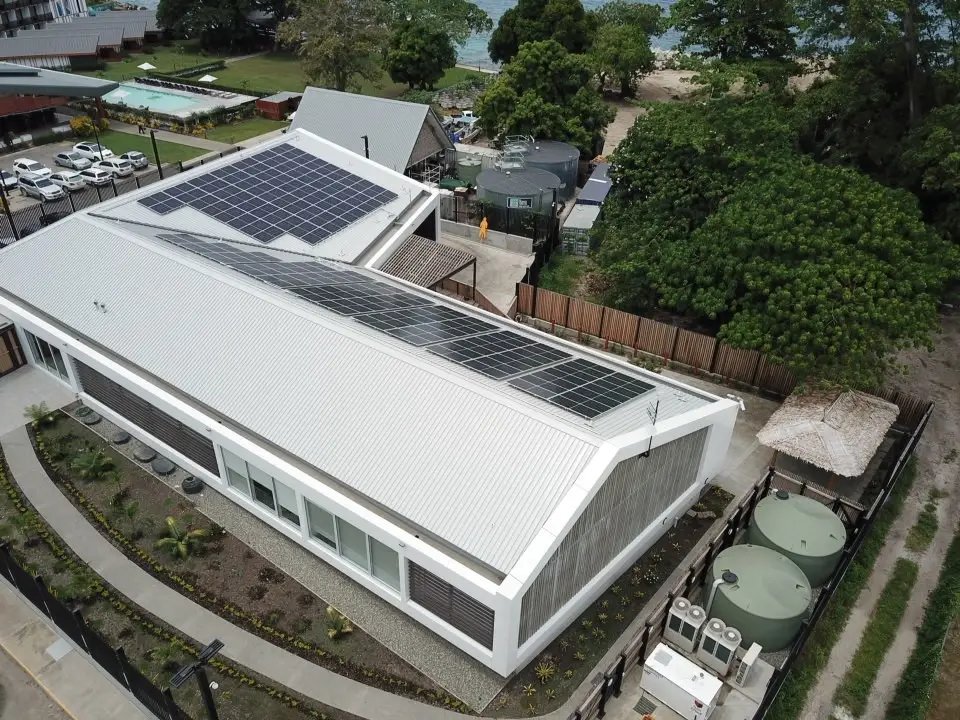
The Ministry’s Decarbonisation Programme was established in August 2021, setting the course to becoming a more sustainable organisation.
The Ministry has a number of sustainability and energy efficiency initiatives under way. Some examples include:
- Updating travel-related policies to reduce emissions while ensuring the Ministry delivers the Government’s priorities;
- Improving the energy efficiency of properties, for example, the installation of LED lighting and integrating efficiency measures into building projects;
- Launching a custom-built Digital Diplomacy Suite to deliver high-quality video conferencing to enable diplomatic impact in virtual engagements and reduce air travel emissions;
- Replacing our existing vehicle fleet with low/no-emission vehicles as they come up for replacement and in countries where conditions allow; and
- Integrating emissions and efficiency-related criteria into business cases for major asset projects.
Our emissions
As we are a foreign service that represents New Zealand around the world, the Ministry’s profile is dominated by travel-related emissions, followed by emissions generated through electricity consumption at more than 330 domestic and international properties in 50 countries. Domestic emissions comprise 3–5 percent of the Ministry’s inventory; international emissions comprise the remaining 95–97 percent.
Figure 1: MFAT emissions trajectory (tCO2e)
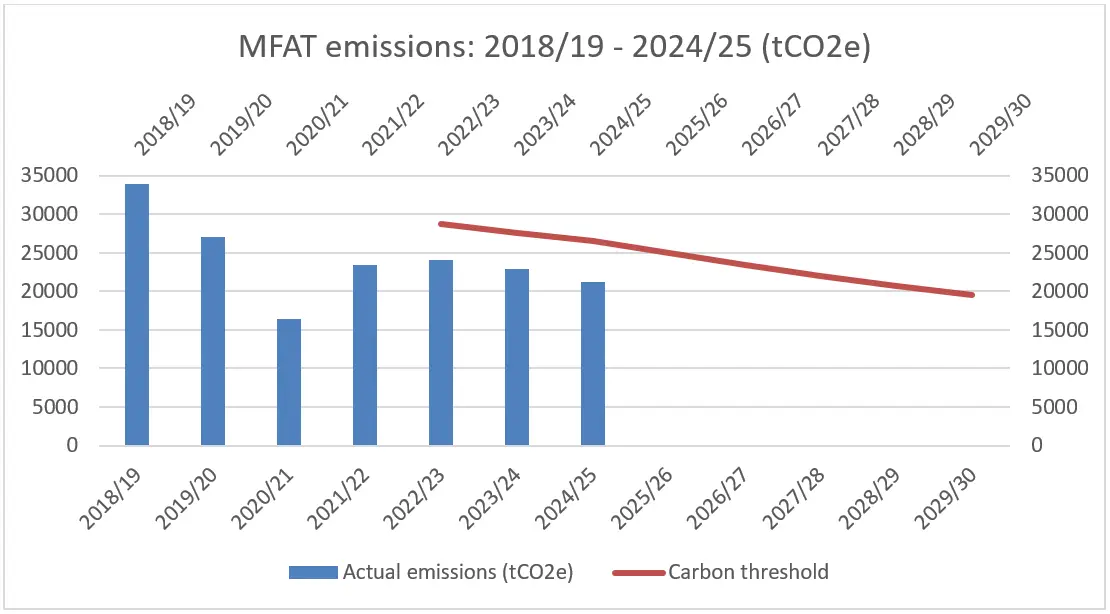
Table 1: Detailed MFAT onshore and offshore emissions: 2018/19 to 2024/25 (tCO2e)
| Source | 2018/19 baseline | 2023/24 | 2024/25 |
|---|---|---|---|
| Air travel | 21,092 | 11,864 | 10,462 |
| Electricity* | 7,254 | 5,993 | 6,076 |
| Freight | 2,306 | 2,063 | 2,031 |
| Accommodation | 957 | 673 | 583 |
| Natural gas* | 601 | 717 | 654 |
| Vehicle fuels | 584 | 471 | 439 |
| Fuel oil | 281 | 230 | 296 |
| LPG* | - | 18 | 14 |
| Diesel – generators* | 206 | 133 | 121 |
| Waste/water | 101 | 576 | 373 |
| Taxis, rail, rental cars, mileage | 90 | 58 | 58 |
| Refrigerants | 106 | 97 | 97 |
| TOTAL EMISSIONS (tCO2e) | 33,578 | 22,893 | 21,204 |
| Change since baseline year | -31.8% | -36.9% |
*Variation in these figures is in part due to improvement in methods for collecting information
Our reduction target
The Ministry set the following emission reduction targets, which are in line with a global emissions pathway that limits warming to no more than 1.5 degrees Celsius; a 21 percent reduction by 2025 from the 2018–19 baseline, and a 42 percent reduction by 2030 from the 2018–19 baseline. The Ministry met its 2025 target.
Our emissions reduction plan
MFAT’s Emissions Reduction Plan [PDF, 1.1 MB] contains a range of activities to ensure we meet our emissions targets, and recognises the importance of advancing an organisational culture of kaitiakitanga and sustainability within the Ministry. The Ministry will seek to reduce emissions from all sources, although we recognise that the largest gains will be made through focusing on our two primary sources.
Related initiatives
The Ministry is also working with some suppliers and contractors of International Development Cooperation-funded activities to track emissions from these activities. More information is available on the Emissions tracking of IDC activities web pages.