

Food and Beverage, Primary Products:
On this page
Summary
Papua New Guinea has been experiencing steady economic growth in the past three years, with GDP growth projected to reach 4.7% in 2025 – driven by increased production in the resource sector (Porgera Mine) and high commodity prices in the agriculture sector. In the medium term, several major projects, including Papua LNG and Wafi-Golpu Mine, are expected to drive resource sector growth once final investment decisions are made. But the non-resource sector is also an important driver of growth and economic diversification, with increasing Government focus on attracting investment into commercial agricultural production and domestic processing. Challenges remain for the economic outlook in the medium term – including maintaining fiscal sustainability and investor confidence.
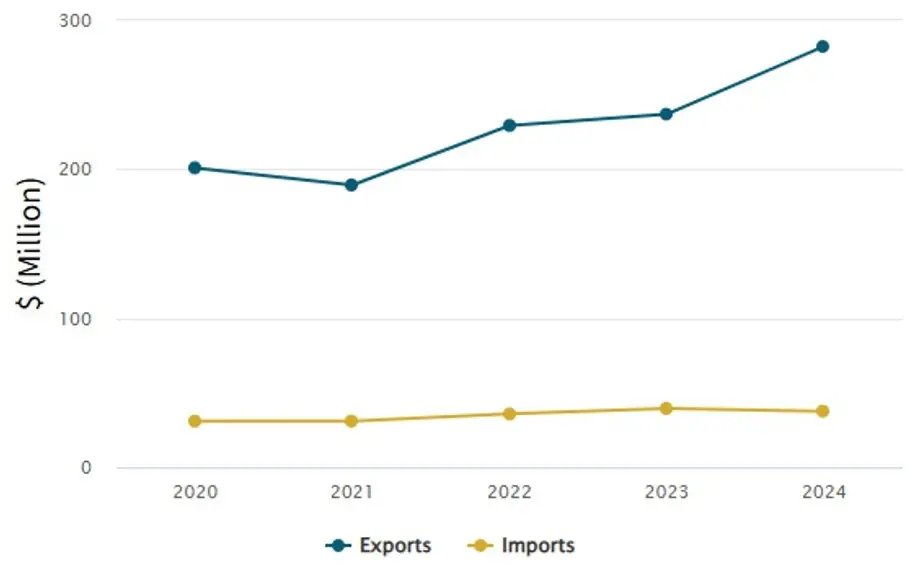
New Zealand’s exports to Papua New Guinea reached NZ$283 million in the year ending December 2024. This was an increase of 19% from the previous year, led by growth in aluminium, electronics, and meat exports. Papua New Guinea’s retail demand remains strong, particularly in centres outside of Port Moresby. Growth in infrastructure investment (backed by international financing) is creating opportunities for New Zealand construction and engineering firms. As Papua New Guinea looks to diversify its economy and strengthen agricultural productivity, there are also opportunities for New Zealand firms providing inputs, technologies, and vocational training in the agriculture sector.
Report
Papua New Guinea’s economy has shown resilience despite a challenging global landscape
Papua New Guinea’s economy grew by 3.8% in 2024 (though some international banks have revised this upward).[1] Despite the reopening of the Porgera gold mine, its operation at lower-than-expected capacity resulted in limited growth (1.7%) in the resource sector. Instead, the economy was principally driven by non-resource sector growth (4.5%), supported by strong performance in cocoa, coffee, copra and fisheries exports, recovery of retail, transport and tourism services, and increased spending on infrastructure projects.
Resource Sector
- LNG exports remained strong in 2024 (43% of total exports), positioning Papua New Guinea as a critical supplier to markets in Asia.
- A planned LNG project (Papua LNG), the first significant LNG development since 2014, has announced that it is making progress towards a final investment decision and expected to drive expanded construction.
- Since 2021, gold exports (21% of total exports) have been increasing (doubling in value from 2021 to 2024), driven by reopening of the Porgera mine and higher global prices.
- Wafi-Golpu Mine is expected to boost medium-term growth in copper output. There are a range of other resource projects on the medium-term horizon.
Non-Resource Sector
- Agriculture, forestry, and fisheries contribute about 18% of GDP and 11% of exports. The sector has benefited from high cacao and coffee prices, and increased production in copra and fisheries.
- The services sector has been expanding steadily, supported by growth in the retail sector (with strong growth in urban centres outside of Port Moresby, such as Lae and Mount Hagen).
- Manufacturing and construction sectors have benefited from increased infrastructure spending.
Fiscal Position & Employment
- The Government of Papua New Guinea remains committed to its fiscal repair plan, with the fiscal deficit expected to narrow further to 2.6% of GDP in 2025, and aiming for a balanced budget by 2027.
- Papua New Guinea achieved satisfactory performance under its IMF-supported program in 2024, meeting nearly all performance criteria and implementing most structural benchmarks. [2]
- Foreign exchange delays persist but have improved significantly with the depreciation of the Kina and stronger foreign currency inflows from the resource and agriculture sectors.
- Inflation has been easing (headline inflation is projected to reach 4.8% in 2025).
- Unemployment remains high, with only about 15% of the workforce employed formally and a growing urban informal workforce.
- The Government has announced that the national minimum wage will rise from PGK 3.50 (NZ$1.40) per hour to PGK 5.00 (NZ$2.00) starting January 2026, the first increase in a decade in response to the rising cost of living. [3]
Growth forecasts from international banks are positive, but with several downside risks – and much depending on major resource projects
International banks forecast strong growth at between 4.6% [4] and 4.7% in 2025 as production increases at Porgera gold mine and Ok Tedi copper mine. [5] However, from 2026, forecasts diverge as much depends on the expected timeframes for planned new resource projects, including Papua LNG, Wafi-Golpu Mine and other mining projects. Without these projects, World Bank and ADB commentators expect growth to slow to the historical average in the medium term (around 3%). With these projects, ANZ and Westpac anticipate strong growth in the medium term (5-6%) driven by foreign direct investment with expected spillover effects into the wider economy. The Government hopes to leverage these major resource projects to grow the economy to PGK 200 billion by 2035 and is working to secure greater national equity and local content in resource sector contracts.
The non-resource sector is expected to remain an important driver of growth, projected to grow approximately 4% annually in the medium term, driven by expansion in the agriculture, forestry, and fisheries sectors. International banks highlight the importance of these sectors in providing economic resilience and diversification. The Government is pushing for structural reforms to grow the non-resource sector, and is seeking to attract investment into agriculture, fisheries, forestry, and manufacturing through Special Economic Zones (SEZs) allowing tax and other concessions to willing investors.
Although the economic outlook is positive, international banks point to a number of downside risks, including commodity price volatility, weakening demand in global markets, and the risk of other shocks to the economy, such as natural disasters. Commodity prices are expected to decrease in 2025 and 2026 (though the anticipated declines are expected to have a more balanced impact on Papua New Guinea due to continued high gold prices and sustained demand for LNG).
The Government of Papua New Guinea remains committed to a fiscal repair strategy, focusing on a sustained reduction in the fiscal deficit and aiming for a balanced budget by 2027. International banks assess that to achieve this, substantial efforts are required to mobilise revenue. IMF Debt Sustainability Analysis classifies Papua New Guinea as at high risk of external debt distress, due to a US$500 million sovereign bond repayment due in 2028 combined with other debt service obligations. With the assistance of partners, the Government has established a Debt Management Strategy to manage debt challenges over the medium term. [6] The Bank of Papua New Guinea has confirmed that it expects Papua New Guinea to be placed on the Financial Action Task Force ‘grey list’ in early 2026, leading to increased monitoring of the country’s anti-money laundering and counter-terrorist financing frameworks.
New Zealand–Papua New Guinea trade has potential for growth in both directions
Papua New Guinea is New Zealand’s 4th largest export market in the Pacific and 35th largest export market globally. [7] Recognising the potential for growth in the trade and economic relationship, in August 2025, Prime Minister Luxon and Prime Minister Marape announced an Economic Plan of Action with steps that both sides will take to lift the trade and economic relationship. Under the Economic Plan of Action, both sides will work towards an uplift in business-to-business engagement, private sector development, and increased cooperation in sectors of mutual interest such as agriculture and fisheries.
New Zealand exports to Papua New Guinea have experienced strong post-pandemic growth, driven by growth in exports of aluminium (up 205% since 2021), electronics (up 52% since 2021), and meat (up 13% since 2021). In 2024, key exports were aluminium (NZ$51 million), electronics (NZ$49 million), meat (NZ$29 million, including poultry NZ$17 million and beef NZ$7 million), and dairy (NZ$20 million). While goods still dominate total New Zealand exports to Papua New Guinea, services trade has been making a recovery from NZ$17 million in 2021 to NZ$36 million in 2024. Travel services feature prominently (NZ$23 million), with other business services still below pre-pandemic levels.
Meanwhile, Papua New Guinea’s exports to New Zealand amounted to NZ$38 million in 2024. Top exports included plywood (NZ$12 million) and coffee (NZ$8 million). Exports of agricultural products such as cacao and taro are small but growing with market interest in New Zealand. Services exports reached NZ$16 million in 2024, predominantly travel (NZ$10 million). Under the Economic Plan of Action, New Zealand is scoping more support to enable Papua New Guinea’s exports to the New Zealand market to grow in priority sectors such as agriculture and fisheries.
Trade with Papua New Guinea in total goods and services
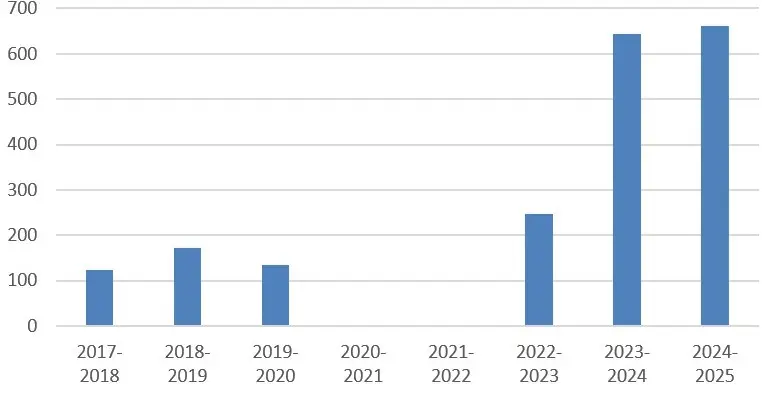
Papua New Guinea seasonal workers make an important contribution to New Zealand’s horticulture and viticulture sectors under the Recognised Seasonal Employer (RSE) Scheme. There has been steady growth in numbers of Papua New Guinea workers under the scheme, reaching 662 workers in 2024-2025, with a continuing large pool of potential workers.
Papua New Guinea RSE worker numbers
Opportunities and challenges for New Zealand companies in Papua New Guinea
Opportunities
Infrastructure is entering a growth phase with a number of projects backed by international financing, including in the transport, hospitality, and energy sectors, creating opportunities for New Zealand firms offering engineering, construction, and technical advisory services. The PNG Ports Infrastructure Investment Program, backed by the Australian Infrastructure Financing Facility for the Pacific, is refurbishing key ports (Lae, Kimbe, Kavieng, Daru, Oro Bay) to improve trade and connectivity. Aviation upgrades are planned, alongside Air Niugini’s fleet renewal, which includes the acquisition of eleven Airbus A220 and two Boeing 787-8 aircraft to improve domestic reliability and open new regional routes. The Government’s ‘Connect PNG’ programme and international financing through ADB and World Bank projects is seeing increased investment into road networks. Papua New Guinea’s hospitality sector is also growing, with leading hotel operators investing in property refurbishments and expanding conference facilities to capture growing demand. Meanwhile, renewable energy is a priority sector for the Government, with plans to increase hydropower, solar and wind generation and improve rural electrification.
Papua New Guinea is also working to strengthen its agriculture sector to boost income and inclusive growth. New Zealand businesses are well-positioned to support this, as Papua New Guinea consumers and government agencies value New Zealand’s agricultural products and technical expertise. Meanwhile, Papua New Guinea continues to offer strong opportunities in its food and beverage sectors, with high demand for imported products. Urban centres outside of Port Moresby have seen particular growth in retail demand, supported by increased income from high commodity prices. There is also potential to grow niche products in Papua New Guinea’s expanding urban consumer market, which remains relatively untapped.
International education is an emerging area of growth. Papua New Guinea agencies are actively seeking partnerships for vocational training and higher education pathways. There is modest ongoing demand for secondary school places for private fee-paying students.
Challenges
Doing business in Papua New Guinea is best navigated with on-the-ground knowledge, and collaboration with local partners. Businesses can find that the costs of doing business are high, with potential challenges in supply chain disruptions, power supply, and internet connectivity. High crime rates in some areas increase operational risk and insurance costs, and businesses often need to invest in private security for staff and assets. Papua New Guinea continues to face foreign exchange shortages, though there have been recent improvements to clearance times under IMF-supported reforms. Frequent changes in tax, customs, and industry regulations require close monitoring.
Business Networks and Support
The New Zealand – Papua New Guinea Business Council can provide advice to New Zealand companies in Papua New Guinea. NZTE (based in Suva) maintains strong engagement to assist businesses entering or expanding in the Papua New Guinea market and has appointed a Beachhead Adviser based in Port Moresby to provide additional guidance. The New Zealand High Commission in Port Moresby also stands ready to provide advice and information as required and is happy to meet visiting New Zealand businesses.
- (The World Bank, 2025)
- (International Monetary Fund, 2025)
- (Armstrong, 2025)
- (Asian Development Bank, 2025)
- (The World Bank, 2025)
- (Government of Papua New Guinea, 2024)
- Statistics New Zealand
References
Armstrong, C. (2025, September 24). Papua New Guinea’s minimum wage set to rise in January. Retrieved from Business Advantage PNG: https://www.businessadvantagepng.com/papua-new-guineas-minimum-wage-set-to-rise-in-january/(external link)
Asian Development Bank. (2025, September). Economic forecasts for Papua New Guinea. Retrieved from https://www.adb.org/where-we-work/papua-new-guinea/economy(external link)
Government of Papua New Guinea. (2024). 2024 - 2028 Medium Term Debt Strategy. Papua New Guinea Treasury.
International Monetary Fund. (2025, June). Retrieved from Papua New Guinea: 2025 Article IV Consultation: https://www.imf.org/en/publications/cr/issues/2025/06/18/papua-new-guinea-2025-article-iv-consultation-fourth-reviews-under-the-extended-arrangement-567819(external link)
The World Bank. (2025, June). Papua New Guinea Economic Update - June 2025. Retrieved from https://www.worldbank.org/en/country/png/brief/papua-new-guinea-economic-update-june-2025(external link)
More reports
View full list of market reports
If you would like to request a topic for reporting please email exports@mfat.govt.nz
Sign up for email alerts
To get email alerts when new reports are published, go to our subscription page(external link)
Learn more about exporting to this market
New Zealand Trade & Enterprise’s comprehensive market guides(external link) export regulations, business culture, market-entry strategies and more.
Disclaimer
This information released in this report aligns with the provisions of the Official Information Act 1982. The opinions and analysis expressed in this report are the author’s own and do not necessarily reflect the views or official policy position of the New Zealand Government. The Ministry of Foreign Affairs and Trade and the New Zealand Government take no responsibility for the accuracy of this report.
Copyright
Crown copyright ©. Website copyright statement is licensed under the Creative Commons Attribution 4.0 International licence(external link). In essence, you are free to copy, distribute and adapt the work, as long as you attribute the work to the Crown and abide by the other licence terms.